

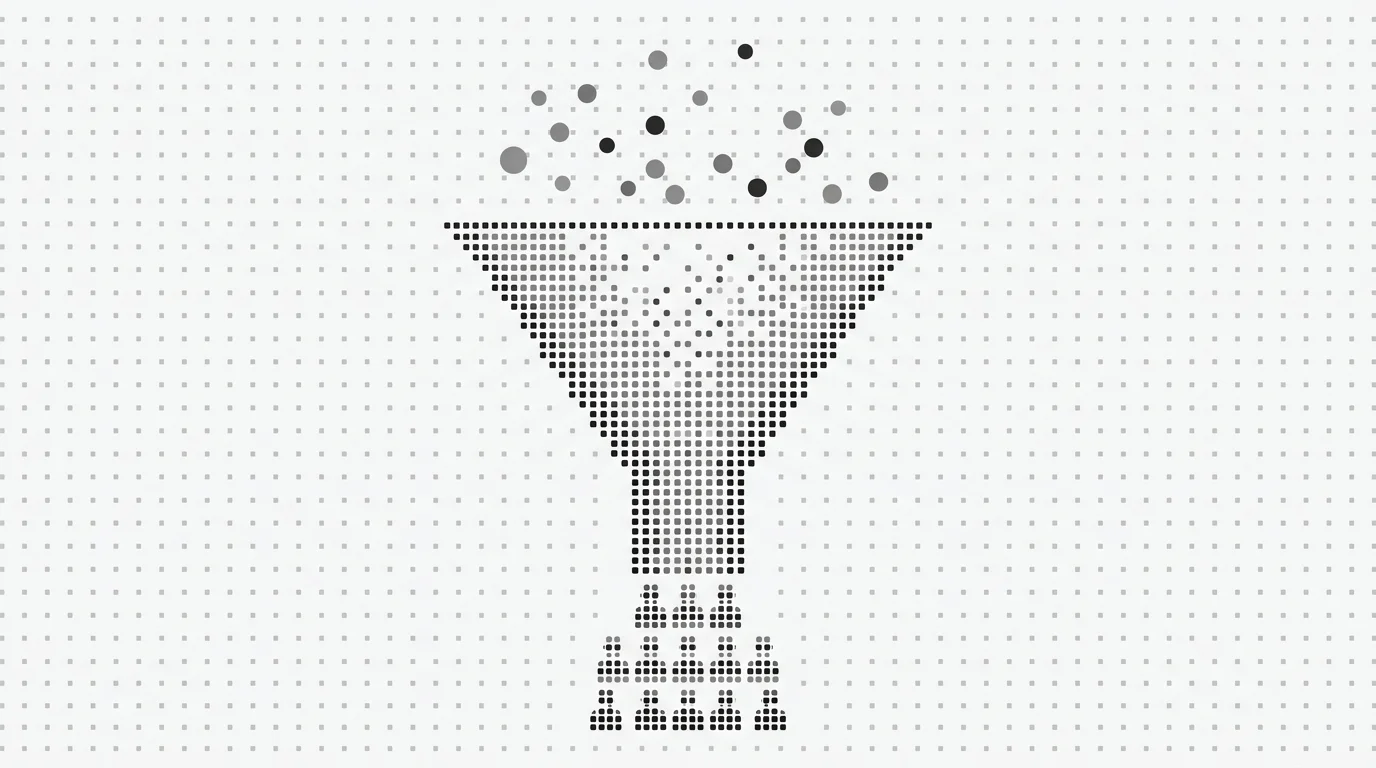
B2B software companies face a unique challenge: long sales cycles, multiple decision-makers, and increasingly crowded markets. Traditional lead generation tactics are becoming less effective as buyers do more research independently before ever talking to sales.
The good news? New tactics are emerging that align with how modern B2B buyers actually behave.
Here are 4 lead generation tactics that are working right now for B2B software companies.
Tactic 1: Website Visitor Identification
The problem: 97% of your website visitors leave without filling out a form. They’re researching, comparing, and evaluating - but you have no idea who they are.
The solution: Visitor identification software reveals who’s on your site, even if they never fill out a form. Learn how to track anonymous visitors.
How It Works
Modern visitor identification tools match your website traffic against databases of companies and contacts. The best tools can identify:
- The company visiting
- The specific person browsing
- Which pages they viewed
- How long they spent on each page
- What brought them to your site
Why This Matters for B2B Software
When someone visits your pricing page, product comparison page, or integration docs, they’re showing buying intent. With visitor identification, you can:
- Reach out before competitors - Contact warm leads before they submit an RFP
- Personalize outreach - Reference the specific pages they viewed
- Prioritize high-intent visitors - Focus on those viewing bottom-funnel content
- Shorten sales cycles - Engage when interest is highest
Recommended Tool: Leadpipe
Leadpipe identifies 30-40%+ of website visitors with person-level data, including:
- Names and job titles
- Email addresses (personal and professional)
- Phone numbers
- LinkedIn profiles
- Complete page visit history
Result: Teams using visitor identification see 260% more leads from the same traffic.
Try Leadpipe free with 500 leads →
Implementation Steps
Getting visitor identification running takes less than a day:
- Install the pixel (2-5 minutes) - Add a JavaScript snippet to your site header. No developer needed.
- Connect Slack - Get real-time alerts when high-value visitors land on your site.
- Set up CRM integration - Push identified visitors directly to HubSpot, Salesforce, or Pipedrive.
- Configure suppression lists - Filter out existing customers and internal traffic so your team only sees net-new prospects.
- Define high-intent pages - Flag your pricing, demo, and product comparison pages for priority alerts.
Day 1 result: You’ll already see identified visitors flowing into your pipeline.
Tactic 2: Intent-Based Content Marketing
The problem: Generic blog content attracts traffic but doesn’t convert to leads.
The solution: Create content that targets specific buying stages and intent signals.
The Intent Content Framework
1. Problem-Aware Content
- “Why [problem] is costing your company money”
- “Signs you need [solution type]”
2. Solution-Aware Content
- “How to solve [problem] with [approach]”
- “Complete guide to [solution category]”
3. Product-Aware Content
- “Best [product category] tools compared”
- “[Your product] vs. [Competitor]”
4. Decision-Stage Content
- “How to implement [solution]”
- “ROI calculator for [product]“
Combine with Visitor Identification
The real power comes from combining intent content with visitor identification:
- Someone reads your “Best visitor identification tools” article
- Leadpipe identifies them as a VP of Marketing at a target account
- Your sales team reaches out with relevant follow-up
- The conversation starts with context, not cold
Content Distribution That Actually Works
Creating content is half the battle. Getting it in front of the right people is the other half:
| Distribution Channel | Best Content Type | Expected Result |
|---|---|---|
| SEO / organic search | Problem-aware, solution-aware | Steady traffic over time |
| LinkedIn organic | Industry insights, contrarian takes | High engagement, shares |
| LinkedIn ads | Product-aware, comparison content | Targeted account reach |
| Email newsletter | Decision-stage, case studies | Direct nurture of warm leads |
| Partner co-marketing | Educational guides, research | New audience exposure |
Key metric to track: Don’t just measure traffic. Measure identified visitors per content piece. A blog post generating 500 visits but 200 identified visitors is more valuable than one generating 2,000 visits with 50 identifications.
Tactic 3: Account-Based Marketing (ABM)
The problem: Spraying and praying to thousands of leads wastes resources on poor-fit accounts.
The solution: Focus marketing and sales efforts on a defined list of high-value target accounts.
The ABM Playbook for B2B Software
Step 1: Build Your Target Account List
- Identify your ideal customer profile (ICP)
- Research companies that match
- Prioritize by revenue potential and fit
Step 2: Multi-Channel Engagement
- Targeted LinkedIn ads to account employees
- Personalized email sequences
- Custom landing pages for each account
- Direct mail to key decision-makers
Step 3: Sales and Marketing Alignment
- Share account intelligence between teams
- Coordinate outreach timing
- Track engagement at the account level
ABM + Visitor Identification = Pipeline
The challenge with ABM is knowing when target accounts are ready to buy. Visitor identification solves this:
| Signal | Action |
|---|---|
| Target account visits website | Alert sales immediately |
| Multiple people from same company visit | They’re evaluating - prioritize |
| Visitor checks pricing page | High intent - reach out now |
| Return visit after 2 weeks | They’re back - re-engage |
Pro tip: Set up Leadpipe to alert you when any target account visits your site. This turns cold ABM into warm outreach.
ABM Implementation Checklist
Getting ABM right for B2B software takes coordination. Here’s a step-by-step checklist:
Week 1: Foundation
- Define your ICP (industry, company size, revenue, tech stack)
- Build initial target account list (50-100 accounts to start)
- Install Leadpipe and configure account-level alerts
- Align sales and marketing on account ownership
Week 2-3: Activation
- Create account-specific landing pages for top 10 accounts
- Launch targeted LinkedIn ads to account employee lists
- Develop personalized email sequences by account segment
- Set up Slack alerts for target account website visits
Week 4+: Optimization
- Review which accounts are engaging (website visits, ad clicks, email opens)
- Prioritize accounts showing the most intent signals
- Adjust targeting based on what’s working
- Report on account engagement, pipeline generated, and deals influenced
The ABM math: Without visitor identification, you’re running ABM blind. You know you’re targeting the right accounts, but you have no idea which ones are engaging. Leadpipe closes that gap by showing you exactly when target accounts visit and who within those accounts is browsing.
Tactic 4: Strategic Outbound with Personalization
The problem: Generic cold emails get ignored. Buyers receive dozens of sales emails daily.
The solution: Hyper-personalized outbound based on real signals and data.
The New Outbound Formula
Old way: Spray generic emails to thousands of contacts
New way: Send highly relevant emails to prospects showing intent
What Makes Outbound Work in 2026
1. Signal-Based Targeting
- Website visits (via visitor identification)
- Job changes
- Funding announcements
- Technology adoption signals
2. Deep Personalization
- Reference specific pages they visited
- Mention their company’s recent news
- Connect to their specific role’s challenges
- Provide immediate value
3. Multi-Touch Sequences
- Email + LinkedIn + phone
- 8-12 touches over 3-4 weeks
- Vary the message and medium
- Include value in every touch
Example: Visitor-Triggered Outbound
Here’s how to combine visitor identification with outbound:
Trigger: Leadpipe identifies Sarah, VP of Marketing at Acme Corp, visited your pricing page
Email:
Hi Sarah,
Noticed Acme Corp has been exploring visitor identification solutions - smart move with your traffic growth this year.
Quick question: Are you seeing the typical 97% of visitors leaving without converting?
Most marketing teams we work with recover 40%+ of that hidden pipeline with person-level identification.
Worth a 15-minute call to see if it fits Acme’s stack?
This outreach is:
- Timely (they just visited)
- Relevant (references their action)
- Value-focused (addresses their likely problem)
- Low-friction (quick call, not a demo)
Putting It All Together
The most effective B2B lead generation combines these tactics into a unified system. Here’s the execution framework:
The 4-Tactic Integration Model
- Create intent content that attracts your ICP to your website
- Identify visitors with Leadpipe to see who’s engaging (30-40%+ match rate)
- Prioritize target accounts showing activity (ABM signals)
- Reach out with personalization based on their behavior (warm outbound)
Each tactic feeds the next. Content brings visitors. Identification reveals who they are. ABM prioritizes the best ones. Personalized outreach converts them.
The Tech Stack
| Function | Tool | Role in the System |
|---|---|---|
| Visitor Identification | Leadpipe | Foundation - identifies who’s engaging |
| CRM | HubSpot, Salesforce, Pipedrive | Stores leads, tracks pipeline |
| Email Sequences | Apollo, Outreach, Reply.io | Automates multi-touch outreach |
| Content | Your CMS (WordPress, Webflow, etc.) | Attracts and educates ICP visitors |
| Analytics | GA4 + Leadpipe | Measures traffic and identification performance |
| Sales Navigator, Dripify | Multi-channel outreach support | |
| Enrichment | Clay + Leadpipe integration | Adds firmographic and technographic data |
Implementation Priority
If you’re starting from scratch, don’t try to launch all four tactics at once. Here’s the order that generates results fastest:
| Priority | Tactic | Time to Impact | Why This Order |
|---|---|---|---|
| 1 | Visitor identification | Same day | Immediate leads from existing traffic |
| 2 | Strategic outbound | 1-2 weeks | Act on identified visitors right away |
| 3 | Intent content | 1-3 months | Build sustainable inbound traffic |
| 4 | ABM | 2-4 months | Requires data from the other three |
Key Metrics to Track
The difference between teams that generate leads and teams that generate pipeline is measurement. Here are the KPIs that matter at each stage:
Top-of-Funnel Metrics
| Metric | Target | How to Measure |
|---|---|---|
| Visitor-to-Identified Rate | 30-40% (with Leadpipe) | Identified visitors / total traffic |
| Identified-to-Contacted Rate | 50%+ | Contacts reached / contacts identified |
| Content-to-Identification Rate | 20%+ | Identified visitors / content page views |
Mid-Funnel Metrics
| Metric | Target | How to Measure |
|---|---|---|
| Response Rate (Warm Outbound) | 15-25% | Replies / outreach sent |
| Lead-to-Opportunity Rate | 20-30% | Opportunities / total leads |
| Speed-to-Lead | Under 1 hour | Time from identification to first outreach |
Bottom-of-Funnel Metrics
| Metric | Target | How to Measure |
|---|---|---|
| Pipeline from Website | 40%+ | Website-sourced pipeline / total pipeline |
| Cost Per Qualified Lead | Under $50 | Total tool + outreach cost / qualified leads |
| Deal Velocity | -20% cycle time | Average days to close for identified leads vs cold |
Monthly KPI Dashboard
Build a simple dashboard tracking these numbers month-over-month:
| Month | Visitors | Identified | Contacted | Meetings | Pipeline |
|---|---|---|---|---|---|
| Jan | 10,000 | 4,000 | 2,000 | 100 | $500K |
| Feb | 12,000 | 4,800 | 2,400 | 120 | $600K |
| Mar | 15,000 | 6,000 | 3,000 | 150 | $750K |
The compound effect is real. Teams that track these metrics consistently see 20-30% improvement quarter-over-quarter just from optimizing their response time and outreach quality.
Start Generating More Leads Today
The fastest way to increase B2B lead generation is to capture the visitors you’re already getting. With 97% of traffic leaving anonymous, visitor identification is the highest-leverage tactic you can implement.
Get 500 free leads with Leadpipe and see exactly who’s visiting your site.